

THE FIRST LOST TOOTH
A little moment
they will always remember

A simple guide for the first wiggly tooth and the little-to-big moments that follow.
When the first tooth begins to wiggle
01 BEFORE THE FIRST TOOTH FALLS OUT
That first wiggly tooth often appears between ages five and six. Our Tooth Fairy kits were created so you can have everything ready, leaving less time spent searching and more time simply enjoying time together.
02 A SPRINKLE OF WONDER
Keep the magic tucked quietly out of sight. Gather the keepsake box, Tooth Fairy letters, small treasure, and fairy dust somewhere discreet, ready for the midnight exchange.
03 A SIMPLE TRADITION
The loveliest traditions are often the simplest. A note for each lost tooth, a small “thank you” treasure if you wish, and a quiet exchange while they are dreaming. Finish with a sprinkle of fairy dust on the nightstand or windowsill.
04 THE BEST PART
The morning discovery, the excitement, and the story they cannot wait to tell you. These are the little-to-big moments you will both keep long after childhood.
One day, a smile looks just the same. The next, there's a tiny gap and so much excitement.
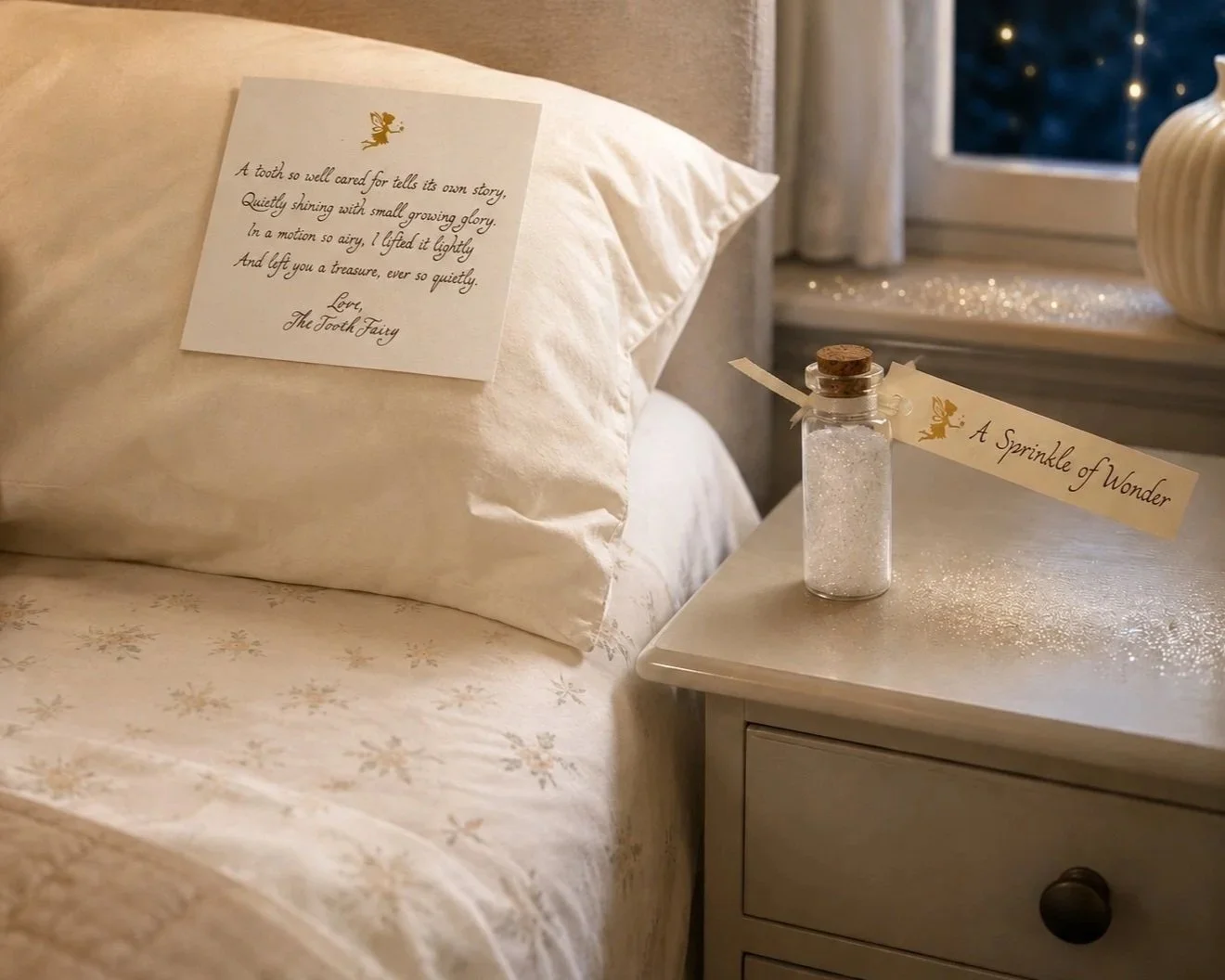
Ready for their first lost tooth?
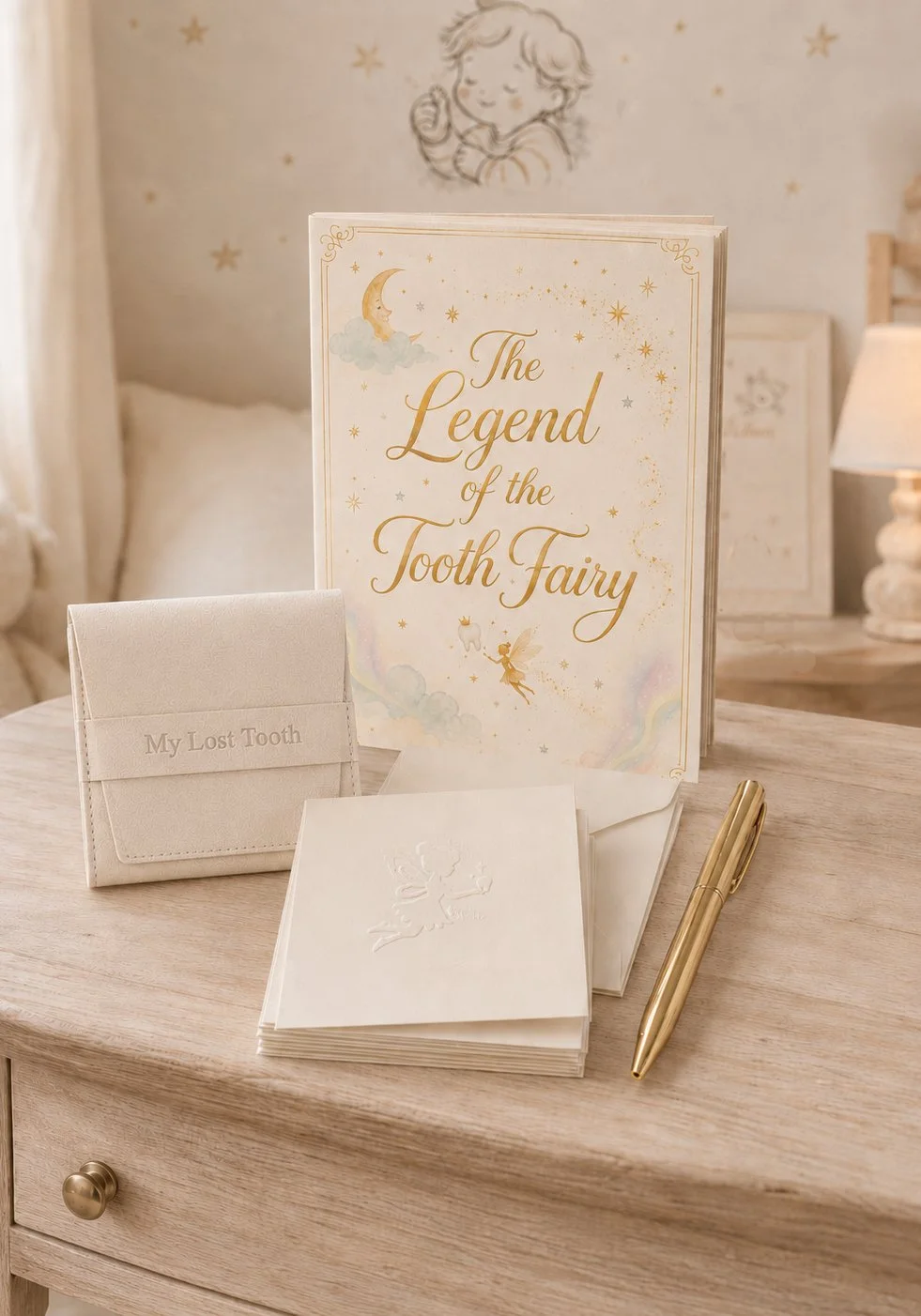
A beautiful beginning to the Tooth Fairy years, created for the very first lost tooth.
• The Legend of the Tooth Fairy, a soft lost-tooth pouch, and the Petit Stationery Set
• 10 note cards, matching envelopes, and a small gold pen sized for little hands
• Made for the first lost tooth, and kept as the beginning of a childhood tradition
MY FIRST LOST TOOTH SET
A story to begin the tradition.
A pouch for the little tooth.
Petite stationery for a note to the Tooth Fairy.

Your Questions, Answered
AT A GLANCE
First typical lost tooth:around ages 5 - 6
Typical amount given: $1–$5, with variations by family
Most helpful: a tooth fairy note, a treasure, and the same routine each time
-
Most children begin losing their baby teeth around age five or six, though it can happen a little earlier or later. The first loose tooth often becomes a meaningful milestone, and many families mark the occasion with a special Tooth Fairy tradition.
-
The first lost tooth is often celebrated with a small surprise from the Tooth Fairy. Many families leave a coin or bill along with a handwritten note, a tiny keepsake, or a sprinkle of fairy dust. Some choose a $2 bill as a rare little treasure, and we have one prepared for you here. These simple touches can help make the first Tooth Fairy feel special.
-
Most families leave $1 to $5 per tooth.
The right amount is the one that feels appropriate for your home and simple to repeat.
-
Reassure your child that it happens from time to time. They can leave a note for the Tooth Fairy explaining what happened and when. Leave the note under their pillow.
-
Keep it calm and simple, explain the tooth fairy must have run out of fairy dust or you might say the Tooth Fairy needed a little more time.
The next night, leave the note that acknowledges the delay and thanks them for being patient.Consider an extra treasure rewarding their patience and understanding.
-
Some families keep them, some don’t.
If you choose to keep them, store them clean and dry in the keepsake box. When your child has grown, you can share their booklet and keepsake box as a childhood memento.
If you choose not to, that is perfectly fine too.
-
A small, simple note, a tiny charm, a sticker, a token, or a small book are all common choices.
The most important part is consistency and care.
-
Either works. In a pouch on the nightstand or windowsill is often simpler than an under-the-pillow search in the dark.
Choose the place that feels calm and repeatable.
-
Most children lose 20 baby teeth over time. The twenty prepared notes and a dedicated keepsake kit can make the tradition feel effortless from the first tooth to the last.
-
Bring a small travel set of your essentials: a tooth pouch, one note, Tooth Fairy dust, and your chosen treasure. The setting can change, but the routine stays the same. A familiar note is often all a child needs to feel the wonder, wherever you are.